A pipe burst is the most common plumbing emergency we respond to in Leander, especially through the December-to-February freeze window. The good news is that damage from a burst pipe is almost entirely a function of how long the water is running — not how bad the break is. If you shut water off in the first ten minutes, most burst-pipe events end as an inconvenience. If it runs for two hours, it ends as an insurance claim.
Step 1: Shut the Water Main (Do This First)
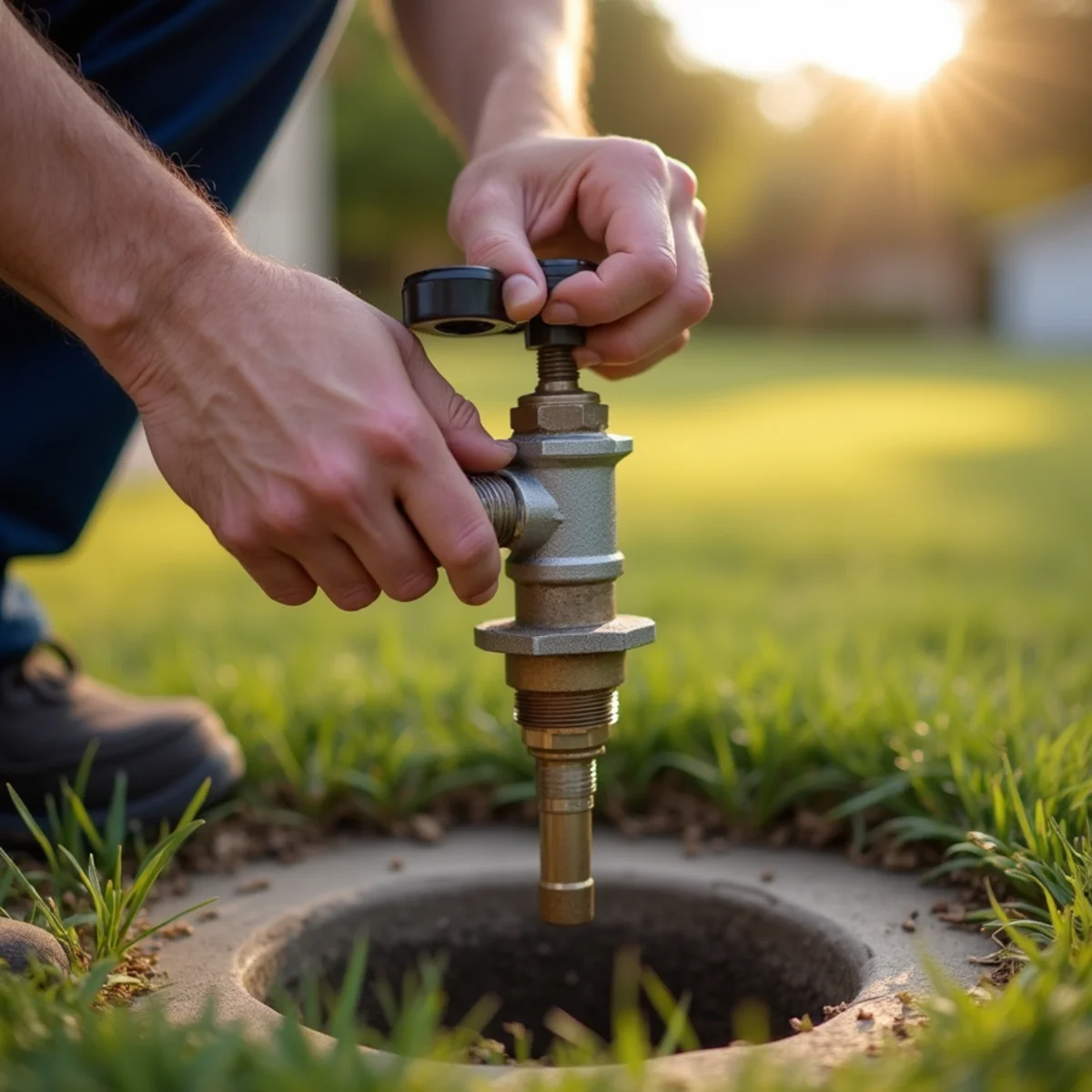
Your home's main water shut-off is one of two places. If you have city water in Leander (most of the 78641 ZIP), the primary shut-off is at the front curb — a rectangular concrete or plastic cover, usually at the front property line. Lift the cover and rotate the valve one quarter turn clockwise (a channel-lock plier or purpose-made curb key works).
Some Leander homes also have an interior shut-off on the exterior wall of the garage or in the front flowerbed. If you can find that one, it's faster than the curb valve — but not every home has one, and not every builder installed it properly.
Step 2: Kill Power to the Affected Area
If water is anywhere near an outlet, light fixture, or breaker panel, kill power at the main breaker. Water plus electricity is not something to hope through.
Step 3: Move What You Can
Every minute of contact with water damages more contents. Prioritize electronics, rugs, and anything you can lift in one motion. Don't try to save drywall or baseboards — that's what restoration companies handle later.
Step 4: Document Everything
Before we arrive, take photos and short videos of the source of the leak (if visible), the water damage, and the affected areas. Insurance adjusters will thank you.
Step 5: Call a Licensed Plumber (Not a Handyman)
Burst pipes are almost always covered by homeowners insurance in Texas — but only when repaired by a licensed plumber, and only when documented correctly. Call our line at (831) 290-4327; a licensed plumber picks up 24/7 in Leander, Cedar Park, Liberty Hill, and Georgetown, and we typically respond inside 60 minutes.
What Happens Next
Once we arrive we'll locate the exact split, cut minimal drywall to access it, repair with copper or PEX, and pressure-test the segment. If the freeze caused multiple splits (common), we'll find them all before turning water back on. You'll leave with a written scope-of-repair document you can submit to your insurance adjuster.
Preventing the Next One
- Insulate every attic run of pipe (foam pipe wrap, $2/ft at any hardware store)
- Install a smart freeze alarm near the water heater
- Learn where your main shut-off is TODAY, not the night of the next freeze
- During named freeze events, drip your farthest faucets and leave cabinet doors open on kitchen sinks
- Keep a bathtub of water for flushing if the city loses pressure
Why Leander Homes Are Prone to Burst Pipes
Central Texas construction assumes mild winters. Attic-run copper, uninsulated garage walls, and exterior hose bibs without foam covers are standard on 90% of the housing stock from Anderson Mill to Travisso. When a hard freeze parks over the Hill Country for 36+ hours — Winter Storm Uri in February 2021 was the most memorable example, but a Uri-scale event now hits Central Texas roughly every 3-5 years — those exposed runs freeze first and split when they thaw.
Post-Uri, thousands of Leander homes were repiped in PEX-A specifically because the old copper couldn't survive another hard freeze. If your home is on the original supply lines and older than 2010, this year is a good year to have a plumber walk the attic and mark every exposed run for freeze-season insulation.
What Insurance Will and Won't Cover After a Burst Pipe
A sudden-and-accidental burst supply line is usually a covered peril on a standard Texas homeowners policy. The water damage — drywall, flooring, cabinetry, contents — is what the coverage is for. The pipe repair itself is often not covered (that's considered maintenance), but the access and restoration usually is.
What insurers watch for: gradual leaks are typically excluded, so if your adjuster sees mineral staining or corrosion that predates the burst, the claim gets contested. Our written cause-and-scope report includes the specific failure mode (freeze split vs. corrosion pinhole vs. impact damage) so your adjuster has a clean answer. For the drying side, the EPA 24-48 hour window matters — if drying doesn't start inside that window and mold develops, mold remediation may not be covered.
How Long Does Burst Pipe Repair Take?
A single burst supply-line repair typically takes 2-4 hours on-site if the wall is accessible. Add drywall patch and paint through a coordinated finish crew and you're 24-48 hours from "done." If the burst exposed larger issues — old polybutylene, aggressive corrosion, or a run that needs full attic rework — we quote a targeted repipe of that supply run alongside the emergency fix, so you don't get called back next freeze.
The bigger clock is the water-damage restoration timeline. Extraction takes hours; structural drying takes 3-5 days; drywall patch and finish takes another 3-7 days depending on scope. Our plumbing scope wraps first so the restoration crew can start their timeline immediately.
Need help right now?
Call (831) 290-4327 — a licensed plumber picks up 24/7.