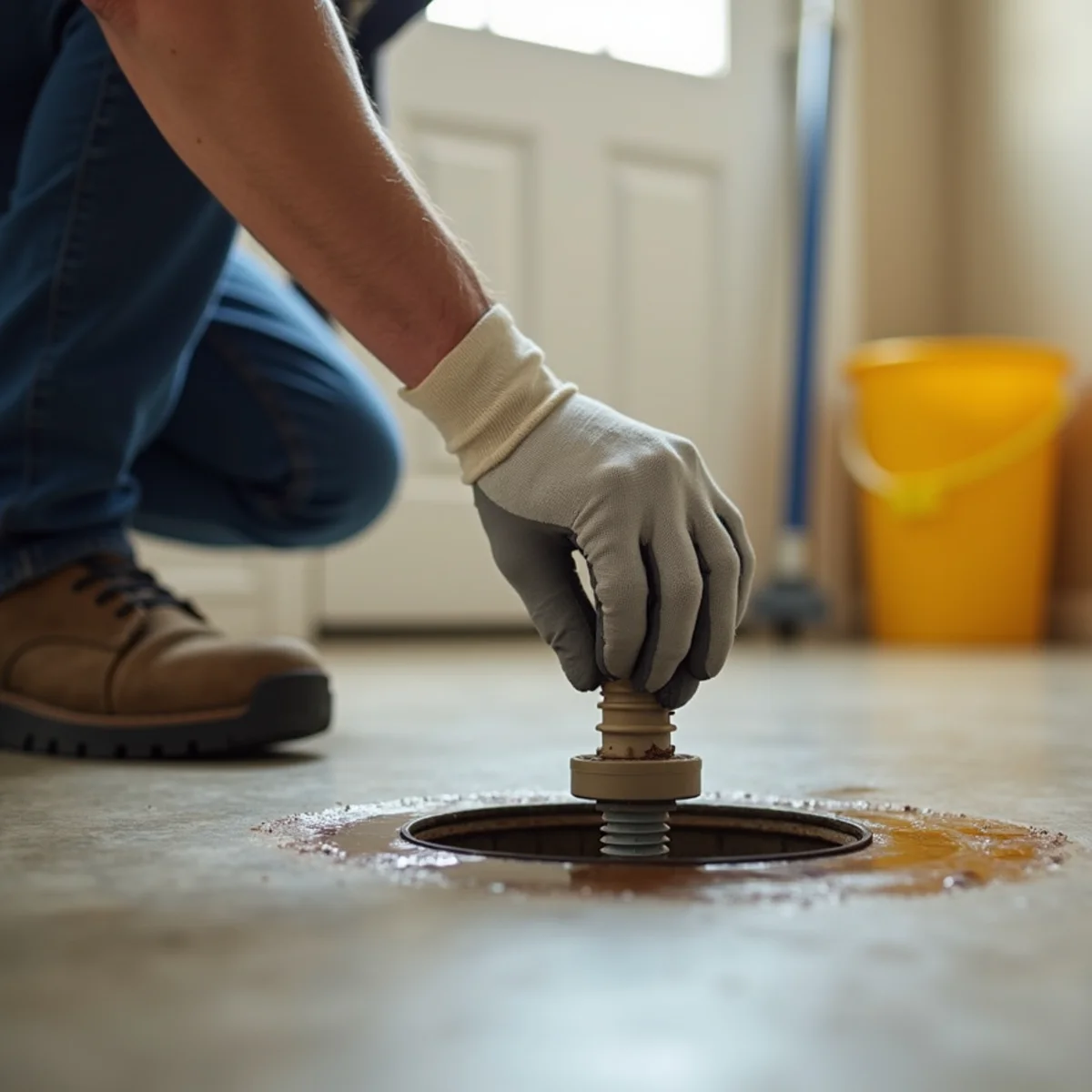
A sewer backup is a health hazard and a homeowner nightmare rolled into one. Raw sewage bubbling up through a floor drain or shower is contaminated water — E. coli, giardia, hepatitis all live in it — and it destroys drywall, baseboards, and carpet within hours. Every additional minute the water runs, the damage doubles.
Step 1: Stop All Running Water in the House
This is the single most important thing you can do. Every flush of a toilet, every shower, and every dishwasher run adds volume to a system that already can't drain. Tell everyone in the house — no water use until the plumber arrives.
Step 2: Isolate Contaminated Areas
Close doors to affected rooms. Move any porous belongings — rugs, cushions, papers — that are still dry. Do not walk in the sewage without waterproof boots.
Step 3: Kill Power to Affected Rooms
If water is near electrical outlets, kill the affected breaker at the main panel. Do not touch outlets with wet hands.
Step 4: Document With Photos
Take photos and short videos before cleanup starts. Insurance adjusters need to see the extent of the backup — the water lines on baseboards, the standing sewage, the affected rooms. Coverage for backup is often a separate rider on Texas policies, and documentation is critical.
Step 5: Call a Licensed Plumber
Call (831) 290-4327. Our line is answered by a licensed plumber 24/7 and we roll trucks equipped with cabled main-line machines, hydro jetters, and a color sewer camera. Typical response inside Leander, Cedar Park, and Liberty Hill: 60 minutes.
What We'll Do When We Arrive
We clear the main line via the nearest outdoor cleanout, camera-inspect to confirm the clog is gone and identify any underlying pipe damage (roots, offsets, collapses), and hand off biohazard cleanup to a licensed restoration partner. You'll get a written report and video for your insurance.
What NOT to Do During a Sewer Backup
The urge to fix sewage is stronger than the urge to fix any other plumbing problem — and every wrong move here makes the insurance and health situation worse. Do not: run fans in the affected room (aerosolizes contamination); pour bleach in the drain (reacts badly with sewage compounds and doesn't address root cause); touch damaged drywall or carpet with bare hands; run the dishwasher, washer, or shower on any other level of the house (adds volume to a system that's already backed up); or start "cleaning up" before a plumber and a restoration contractor have assessed and photographed the scene.
Sewage in the home is a Category 3 water-damage event by industry standards — the most contaminated tier. That's why professional cleanup exists as a separate specialty from plumbing. Our job stops the source; theirs restores the space.
Diagnosing the Root Cause After a Sewer Backup
Every sewer backup we clear gets a follow-up camera inspection — because clearing the immediate blockage without knowing the cause guarantees the next backup. The most common Leander causes, ranked by frequency: (1) root intrusion at a specific joint in older cast-iron or clay lateral, (2) grease buildup at a fixture-adjacent bend in kitchens, (3) flushed wipes or feminine products at the first sharp turn in the lateral, (4) belly (sagged section) in an older PVC line where solids collect, (5) offset joint from settling or clay-soil movement, (6) full collapse in cast-iron or Orangeburg pipe past end-of-life.
The camera footage tells you which category and where it sits. That's how you know whether you need a $400 hydro jet, a $2,500 spot repair, or a $8,000 full replacement — before you authorize excavation.
Preventing the Next Sewer Backup
Three preventive moves that stop repeat backups: (1) sewer-camera the line every 3-5 years and every fall in root-heavy neighborhoods; (2) install a backwater valve if your home's fixtures sit below the elevation of the utility main (common in older lowland Leander lots), which prevents city-side backups from entering your home; (3) never flush anything but toilet paper — no wipes even labeled "flushable," no dental floss, no cotton, no grease down the kitchen drain.
Need help right now?
Call (831) 290-4327 — a licensed plumber picks up 24/7.