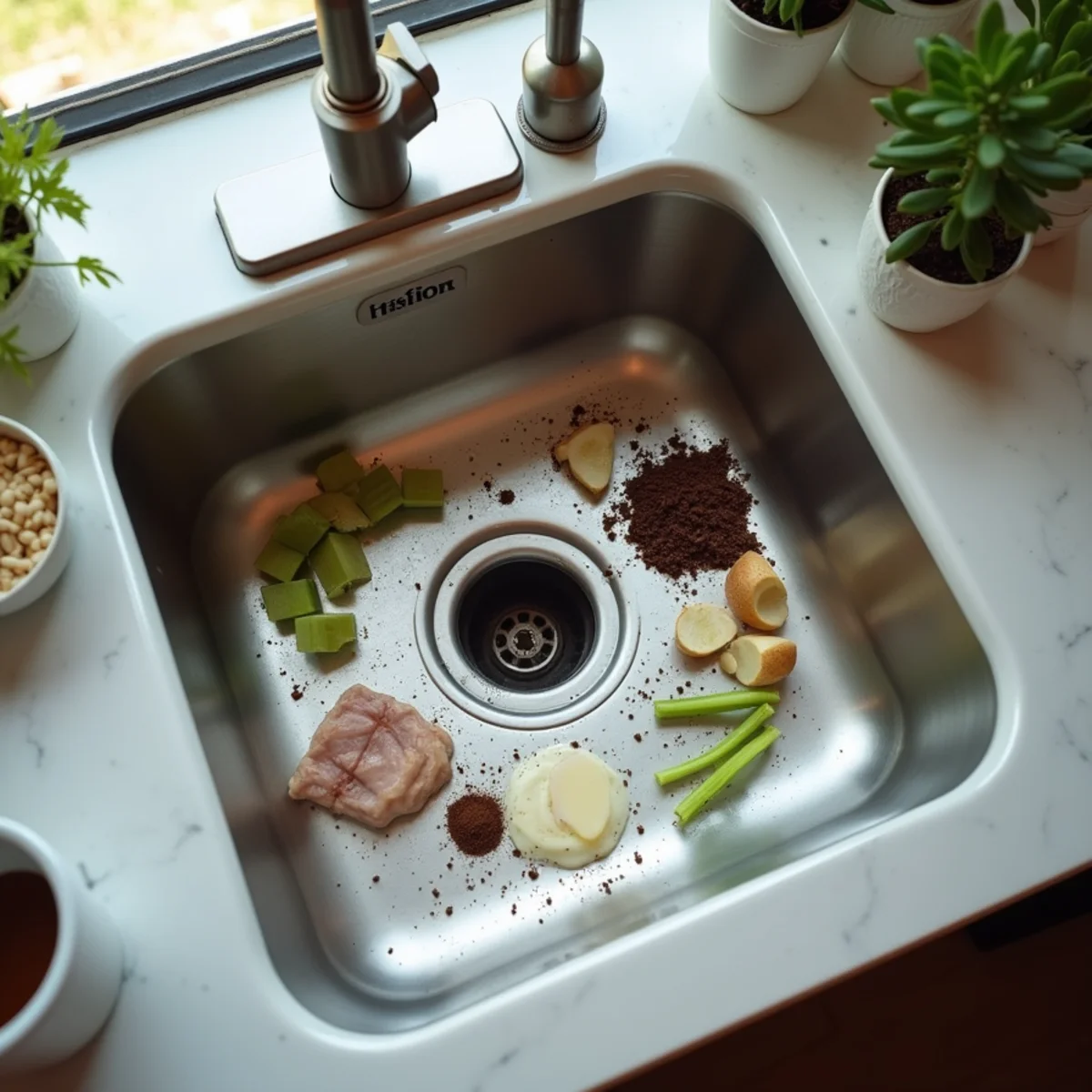
Your garbage disposal is a helpful little machine — until it isn't. Almost every disposal-related call we run in Leander traces back to one of the same seven items. Avoid them and the disposal will last 10+ years.
1. Coffee Grounds
Coffee grounds are the #1 disposal killer. They don't dissolve — they clump into a mud-like sludge that lines the discharge pipe and causes recurring clogs.
2. Grease, Oil & Fat
Anything liquid when hot becomes solid when cold. Bacon grease, chicken fat, and cooking oil all congeal inside your drain and cause main-line clogs that only a hydro jetter can clear.
3. Eggshells
The membrane inside eggshells wraps around the disposal impellers and the shell fragments act like sandpaper on the drain lines.
4. Pasta, Rice & Bread Dough
Anything that absorbs water and swells. Pasta and rice keep expanding after they hit the drain — the perfect clog material.
5. Fibrous Vegetables
Celery, corn husks, onion skins, artichoke leaves — the fibers wrap around impellers and jam the motor.
6. Fruit Pits & Bones
Peach pits, avocado seeds, chicken bones — the disposal wasn't designed for hard objects. It'll break before the pit does.
7. Non-Food Items
Paper towels, plastic wrappers, twist ties — anything not food. Yes, we've pulled all of these out of disposals in Leander.
What CAN Go Down the Disposal
Small, soft food scraps rinsed with plenty of cold running water. That's about it. When in doubt, use the trash — landfill vs. plumbing repair, the landfill always wins.
The Physics of Why These Foods Kill Disposals
A garbage disposal isn't a shredder — it's an impact hammer. Spinning impellers throw food against a grinding ring, and the resulting slurry washes down the drain with running water. Foods that create rope-like strands (celery, corn husks), foods that swell in water (rice, pasta), foods that stick to metal (grease, egg yolks), and foods that harden after grinding (bones, fruit pits) all defeat the impact-hammer mechanism in different ways.
The result is either an immediate jam (the disposal hums but doesn't spin) or a delayed drain clog (a paste of ground food solidifies in the P-trap or the drain line, sometimes days later).
What Actually Belongs in the Disposal
The disposal is designed for soft food scraps that come off dishes during rinse: bits of cooked vegetable, small pieces of meat, coffee grounds in very small quantities (contentious — some plumbers say never, others say small amounts with lots of water are fine — our take: skip them, they're better in compost), citrus peels for freshening the smell, ice cubes to sharpen the impellers, and a splash of dish soap.
The Signs Your Disposal Is Dying
- Persistent hum without grinding — impellers are jammed; unplug the disposal, insert a hex wrench in the bottom, and rotate to free them
- Grinding sound but water doesn't drain — clog downstream of the disposal in the P-trap or branch line
- Water leaking under the sink after use — either the sink flange, the dishwasher connection, or the discharge tube gasket has failed
- Constant tripping of the reset button on the bottom — motor overload from a failing bearing or persistent jam
- Bad smell that won't go away with citrus — bacterial buildup on the splash guard or in the grinding chamber; replace the splash guard first
Need help right now?
Call (831) 290-4327 — a licensed plumber picks up 24/7.