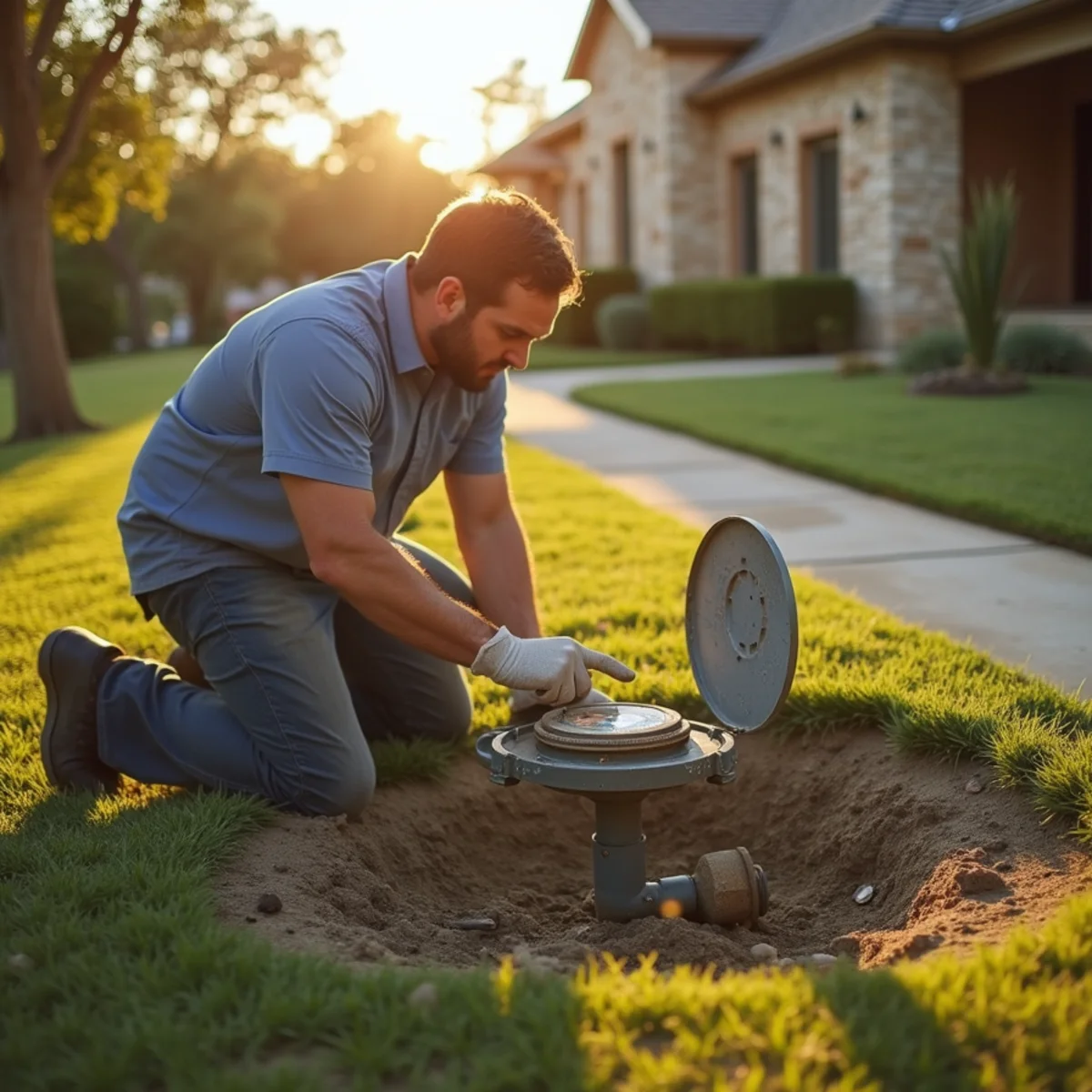
A sudden City of Leander water bill jump of 30% or more almost always means one thing: a hidden leak that's running 24 hours a day on your side of the meter. The most common Leander culprits are a silent toilet flapper (200 gallons a day), an irrigation valve stuck half-open (200-800 gallons an hour), and a slab-leak pinhole on a hot-water copper line (500-2,000 gallons a day). The 30-minute investigation below is exactly what we walk every Leander homeowner through on the phone before deciding whether to dispatch a truck.
The 30-Minute Leander Water Bill Investigation
Minute 0-5: Shut Everything Off
Shut off every fixture and appliance in the house that uses water: all toilets (not just one), all faucets, washer, dishwasher, ice maker, refrigerator water line if present, pool fill valve, and the entire irrigation controller. If any member of the household might use water in the next 20 minutes, give them a heads-up.
Minute 5-10: Walk to the Water Meter
Your Leander water meter is at the front curb — a rectangular concrete or plastic cover near the sidewalk or property line. Lift the cover. Modern City of Leander meters have a low-flow leak indicator — a small triangle, dial, or star-shaped icon that spins when water is moving. If it's spinning with every fixture shut off, you have a leak somewhere on your side of the meter. If it's completely still, the leak may be intermittent (irrigation timer) or the issue may actually be a meter mis-read.
Minute 10-20: Toilet Investigation
Toilets are the number-one hidden-leak source in Leander homes. Put 5-10 drops of food coloring in each toilet tank, wait 15-20 minutes without flushing, then look in the bowl. Any color in the bowl means the flapper is leaking silently — a $20-$150 fix that was costing you $400-$600 a year in wasted water. Check every toilet in the house; it's common to find more than one leaking.
Minute 20-25: Irrigation Audit
A stuck irrigation valve can run 200-800 gallons an hour silently. Walk the yard the morning after a scheduled irrigation cycle — soggy spots where sprinklers didn't reach mean an underground line break; valve boxes that are wet without the system running mean a stuck valve. Also look at the irrigation controller history: a timer accidentally set to run four times a day instead of once can triple your water bill without any actual leak.
Minute 25-30: Slab-Leak Signs
If the meter is still spinning after you've ruled out toilets and irrigation, suspect a slab leak. Walk every room with bare feet — a warm spot on tile or wood flooring is the classic hot-water slab-leak signature. Also listen in each room when the house is quiet: a hissing or running-water sound inside a wall or under the floor with no fixture in use is diagnostic. Check your water heater as well — if it's running more often than it used to, hot water may be leaking continuously through a slab pinhole.
What the Investigation Tells Us
- Meter spinning + food coloring in bowl = toilet flapper(s) — DIY fix for $15-$40 in parts
- Meter spinning + wet valve boxes = irrigation issue — $75-$300 for valve replacement
- Meter spinning + warm floor spots = slab leak — call for electronic leak detection
- Meter spinning + no obvious cause = call for electronic leak detection (hidden supply-line pinhole)
- Meter still + bill still high = call the City of Leander utility (possible meter mis-read or billing error)
When to Call vs. Keep Investigating
Call us when: (1) the meter is spinning but the 30-minute investigation didn't reveal the source, (2) you found slab-leak symptoms (warm floors, pressure drop, hissing in walls), (3) you see any water in the wall or ceiling, or (4) your bill jumped by more than 50% and you cannot find any explanation. Our flat Leander-area leak-detection fee is credited back if we do the repair, so you never pay twice for the same visit.
What Leander Hidden Leaks Actually Cost
- Silent toilet flapper: 200 gallons/day = roughly $8-$15/month in Leander utility rates
- Multiple leaking toilets: 400-600 gallons/day = $20-$45/month wasted
- Stuck irrigation valve running 2 hours overnight: ~500-1,600 gallons/night = $60-$180/month
- Slab-leak pinhole on hot-water line: 500-2,000 gallons/day = $40-$180/month wasted PLUS the water heater running constantly = $25-$75/month extra on electric or gas
- Underground irrigation main-line break: 1,000+ gallons/day = $80-$250/month wasted PLUS yard damage
The Water Meter Reading Rhythm Most Leander Homeowners Miss
Read your City of Leander water meter on the same day each month, and you'll catch bill creep weeks before the statement arrives. A $0.50/month creep is usually seasonal (hotter weather, more irrigation). A $3/month creep over 2-3 months is almost always a slowly worsening leak — most often a toilet flapper deteriorating from mineral exposure. Catching this early is the difference between a $25 flapper fix and a $400 wasted-water bill.
Why Leander Water Bills Are Particularly Vulnerable to Hidden Leaks
Three Leander-specific factors make hidden-leak costs stack up fast: (1) the City of Leander tiered rate structure means heavy-use months are charged at a higher per-gallon rate — so a 24/7 leak pushes you into a punitive tier, (2) summer peak demand pricing adds 15-25% to leak costs between May and September, and (3) the Edwards aquifer limestone water's mineral load degrades toilet flappers and valve seats faster than softer water would, so hidden leaks appear more often here than they do in, say, Dallas or Houston.
Need help right now?
Call (831) 290-4327 — a licensed plumber picks up 24/7.