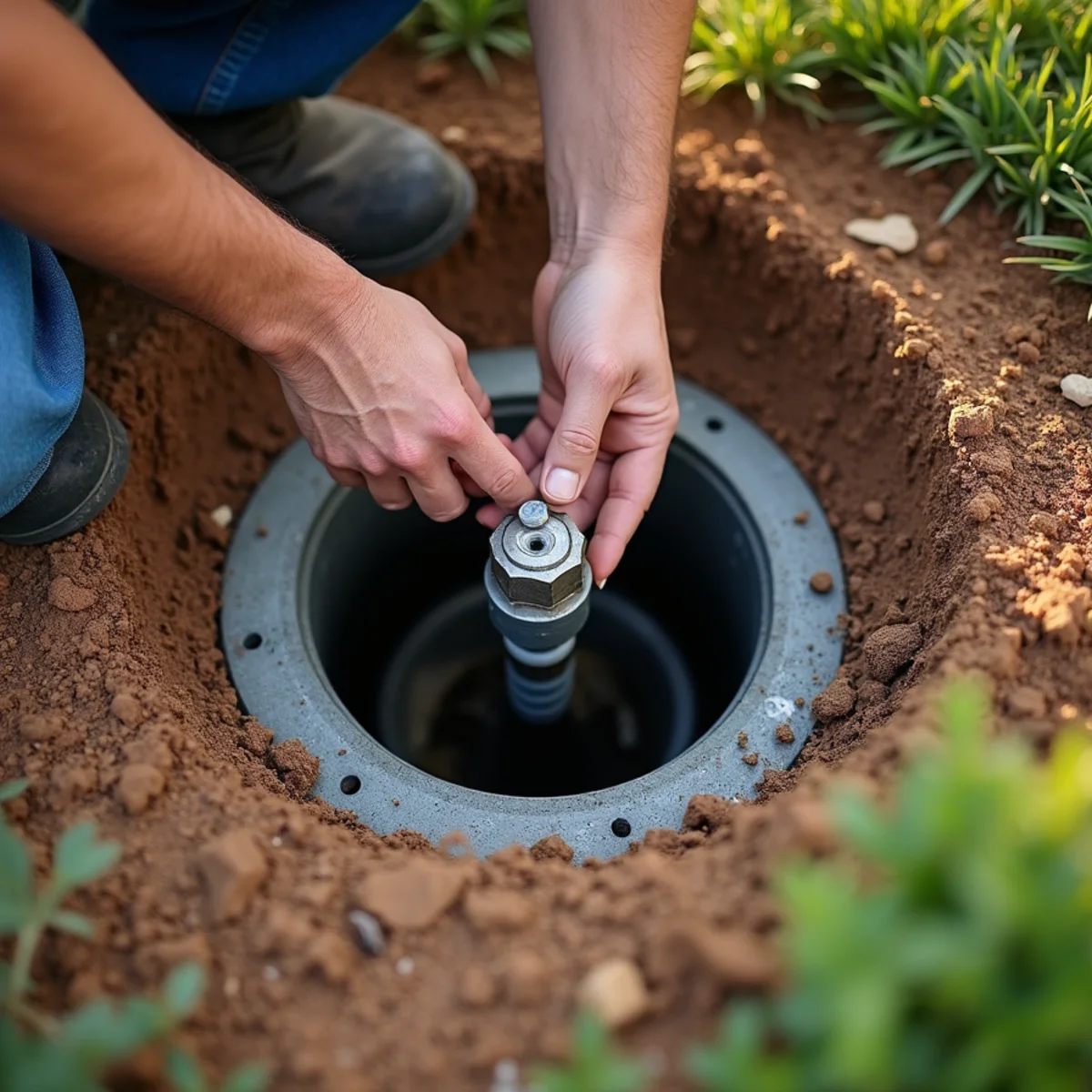
Every emergency plumbing call has one thing in common: the first minute matters more than the next hour. And the first thing we do on the phone is walk the homeowner to their water shut-off. Half the time, the homeowner has never located it. That's what this article fixes.
Where Yours Probably Is
- Front curb — a rectangular concrete or plastic cover at the property line (all Leander city-water homes)
- Exterior wall of the garage — a labeled ball valve or gate valve (in some new construction)
- Interior utility closet — rare, but present in a few Leander townhomes and condos
How to Turn It Off
Front curb valves need to be rotated 90 degrees clockwise. You'll want a channel-lock plier or a purpose-made curb key (about $10 at Home Depot). Interior/exterior ball valves turn 90 degrees so the handle is perpendicular to the pipe. Gate valves turn multiple full turns clockwise until they stop.
Test It Now, Not During an Emergency
Older shut-offs can freeze in place. Practice turning it off and back on this weekend. If it's stuck or feels wrong, we can replace it before you need it.
Individual Fixture Shut-Offs Matter Too
Every toilet has a shut-off at the wall. Every sink has one under it. Every washer has two behind it. If your main shut-off is stuck, fixture-level valves can isolate the problem. Learn where they all are.
Post the Location on the Panel
Write the shut-off location on a piece of paper and tape it to the inside of your electrical panel door. Sitters, tenants, and visiting family will thank you.
The Three Places Your Main Shut-Off Might Be
In a typical Leander home, the main water shut-off is in one of three places, in order of likelihood:
- At the front curb box near the property line (most common) — a rectangular concrete or plastic cover, usually near the sidewalk. Lift the cover to expose the meter and a curb-key valve. Rotate one-quarter turn clockwise with a curb key or a large channel-lock pliers to close.
- On the exterior wall of the garage or in the front flower bed (about 30% of Leander homes) — a lever-handle valve on the house side of the meter, often behind a small green plastic access box. Turn the handle perpendicular to the pipe to close.
- Inside the garage on the wall shared with the house (older homes and some builder configurations) — same lever-handle design, mounted at chest height on the interior wall. Rare but does exist.
How to Test the Shut-Off Before You Need It
Once you find the valve, test it before you need it. Close the valve, walk inside, and open any faucet — flow should stop within 30-60 seconds. If it doesn't stop, or if the valve won't turn, call us — the valve is either corroded shut or leaking past. Both are common on 20+ year old Leander homes. Replacement runs $250-$650 depending on access and is worth every dollar.
Test the valve annually — a valve that hasn't turned in 10 years is probably seized. The middle of an emergency is not the time to discover the shut-off doesn't work.
Labeling and Sharing the Shut-Off Location
Once you find and test the valve, do three things: (1) take a photo of the valve location with the surrounding landmarks visible; (2) label the location on paper somewhere accessible (kitchen drawer, fridge, home binder) — "Water main: front curb near mailbox"; (3) walk every adult in the house through the location and how to turn it. In an emergency, whoever is home needs to know — not just the person who's not home when the pipe bursts.
Need help right now?
Call (831) 290-4327 — a licensed plumber picks up 24/7.