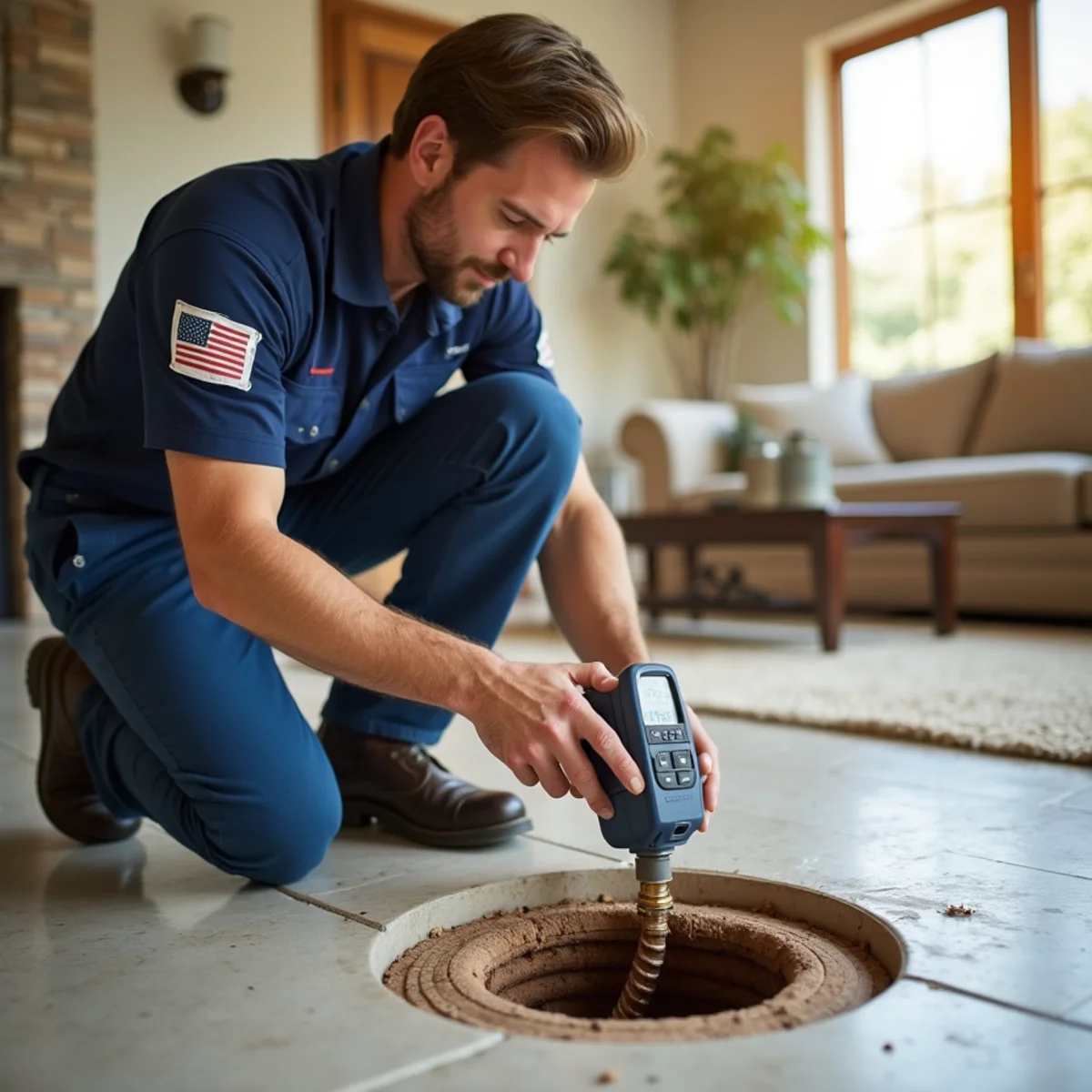
Williamson County has one of the highest slab-leak rates per capita of any Texas metro, and the reason is right under your feet: expansive Houston Black clay soil that swells and shrinks dramatically between wet and dry cycles. When copper supply lines running under 40-year-old slab foundations get pulled sideways by that soil movement, they crack — quietly, at first.
The Geology Behind the Problem
The Houston Black soil series dominates east of I-35 and shows up in patches across west Williamson County. This clay expands up to 30% in volume when wet and shrinks by roughly the same when dry. Over decades, that movement grinds against buried copper until pinhole leaks or joint separations develop.
Housing Patterns Most at Risk
- Round Rock West and older Round Rock subdivisions (1980s copper-in-slab)
- Buttercup Creek, Twin Creeks Cedar Park (mid-80s builds)
- Sun City Georgetown phases 1–3 (1990s-early-2000s)
- Brushy Creek CDP (1980s master-planned homes)
- Older Pflugerville subdivisions
Symptoms to Watch For
- Warm spot on the floor (hot-side slab leak)
- Wet carpet or baseboard with no visible source
- Water bill up 25% with no usage change
- Sound of running water with all fixtures off
- Cracked or lifting floor tile
The 'One Leak Means More Coming' Rule
When one slab leak appears on aging copper, ask the plumber to camera-inspect any accessible copper runs. A single leak on 30-year copper often means more are imminent. In those cases, the calculus often favors a whole-home reroute repipe now rather than 3–5 years of serial spot repairs.
How We Repair Slab Leaks
- Spot repair — open the slab at the leak point, splice, and patch the floor
- Reroute — run new PEX through the attic, abandon the slab line
- Tunnel — dig a small tunnel under the slab from outside without breaking the floor
The right choice depends on leak location, floor type, and pipe condition. We give you 2–3 options with pros/cons on every call.
Why Williamson County Clay Causes Slab Leaks
The soil profile across Williamson County — from Cedar Park through Georgetown to Hutto — is dominated by expansive clay above the limestone bedrock. Expansive clay swells when wet and shrinks in drought, moving by measurable inches through seasonal cycles. That vertical movement is what stresses slab foundations, and it's also what stresses copper supply lines embedded in or under those slabs.
The stress isn't uniform. Corner rooms move more than interior rooms. Rooms adjacent to large mature trees (live oaks and pecans in most Leander subdivisions) move more because roots dry the soil aggressively during Central Texas summers. Slab leaks correlate strongly with these high-movement zones — which is why our leak-detection reports include a "probable root-cause analysis" alongside the specific line location.
The Williamson County Slab Leak Warning Signs
- Warm spots on tile floors — the classic hot-water slab leak signature (hot water leaking under the slab warms the concrete)
- Sudden pressure drop with everything shut off — supply-side leak on either hot or cold
- Low-flow leak indicator on the water meter spinning with every fixture shut off
- Unexplained rise in water bill without an obvious cause (no irrigation, no visitors)
- Water heater running more than usual (leaking hot line means constant demand)
- A hissing or running-water sound audible when the house is quiet, with no fixture in use
- Musty smell in a specific room without visible moisture
- Damp or discolored carpet, hardwood, or tile with no visible surface source
The Repair-vs-Reroute Decision for Williamson County Homes
For a first-time pinhole on newer copper (built 2005+): spot repair through the slab, $1,800-$4,200. For 20-30 year old copper with recurring pinholes: overhead reroute of just the affected line, $2,900-$5,600, with a lifetime workmanship warranty. For homes with 3+ documented slab leaks or original polybutylene supply (common in some 1970s-80s subdivisions in Cedar Park and Georgetown): whole-home PEX-A repipe, $4,950-$12,100, with a lifetime workmanship warranty and no more slab-embedded copper to worry about.
Need help right now?
Call (831) 290-4327 — a licensed plumber picks up 24/7.