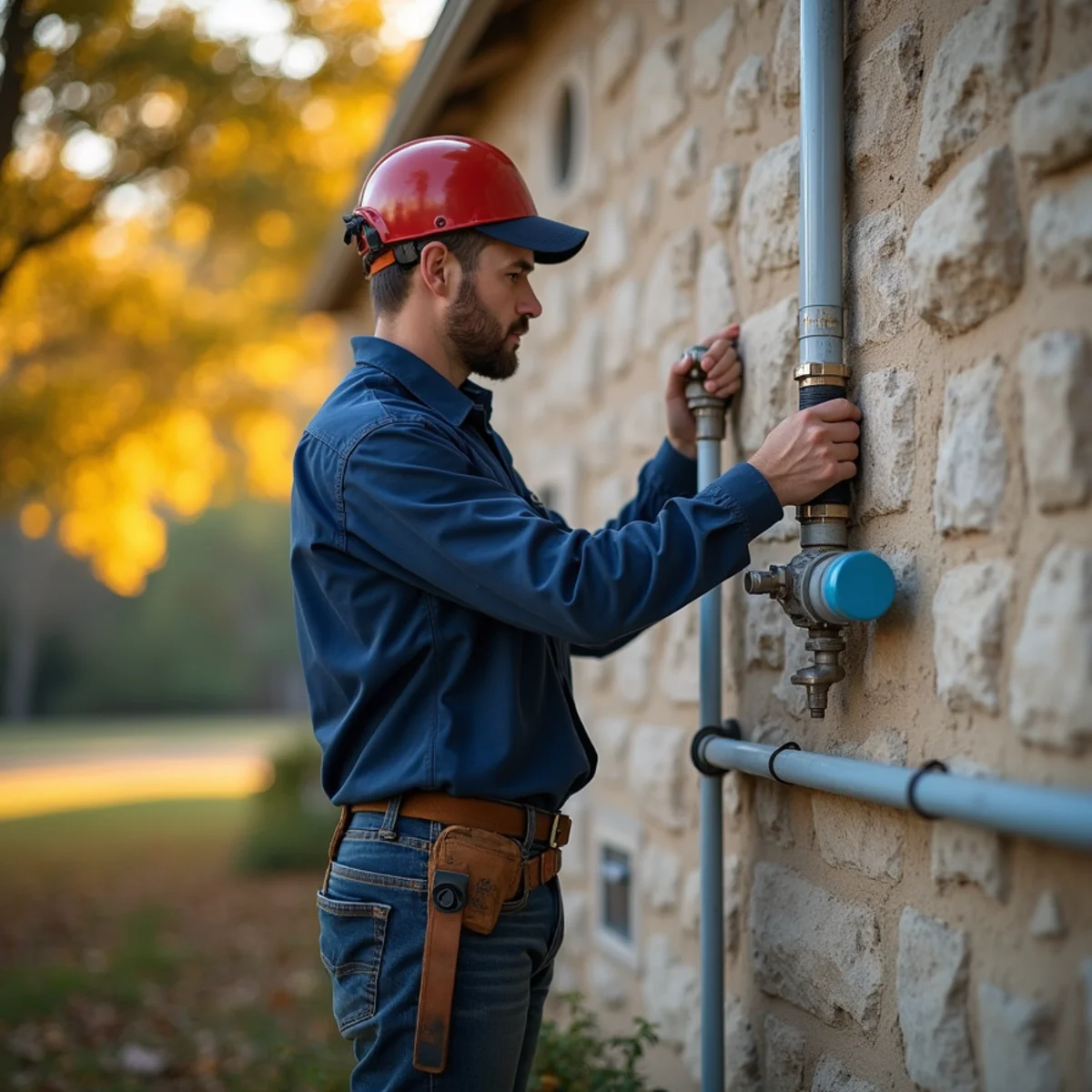
Every year around December, weather models start hinting at whether the coming winter will bring another Uri-scale event. Whether it does or doesn't, the winterization checklist is the same. 45 minutes now saves you 45 days of repairs later.
Weekend Before Freeze Season (November)
- Wrap every attic pipe run with foam pipe insulation ($2/ft at any hardware store)
- Install faucet-cover socks on every hose bib
- Disconnect and drain garden hoses
- Install a smart freeze alarm near the water heater
- Verify the main water shut-off works
- Winterize any pool / spa equipment per manufacturer specs
Day Before a Named Freeze Event
- Set the water heater to 120°F (do not turn off)
- Open cabinet doors under kitchen and vanity sinks so heat reaches the supply lines
- Fill a bathtub with water for flushing if city pressure fails
- Locate and test your shut-off — parents, kids, sitters all need to know where it is
- Charge phones and any battery packs
During the Freeze
- Drip your farthest hot and cold faucets to keep water moving
- Do not turn thermostat below 55°F
- If power fails, keep the house warm by all household members gathering in a central room
If a Pipe Freezes But Hasn't Burst
Warm the affected section slowly with a hair dryer or warm towel, working from the fixture back to the frozen segment. Never use a torch. Keep the fixture open so melted water has somewhere to go.
If a Pipe Bursts
Shut the main immediately, kill power to the affected area if water is near electricals, and call (831) 290-4327. We answer 24/7 and prioritize freeze-event calls.
The Six-Week Central Texas Winter Prep Timeline
- 6 weeks out (early November): audit every exposed pipe — attic runs, garage walls, exterior hose bibs, above-ground sprinkler backflows. Note anything missing insulation.
- 4 weeks out (mid-November): install pipe insulation foam on every exposed supply run in attics and garages. Add foam hose-bib covers to every exterior spigot.
- 2 weeks out (early December): locate and test your main water shut-off. If you can't find it or it's stuck, call us now — a Uri-scale freeze with an unknown shut-off is thousands of dollars in avoidable damage.
- 1 week out (mid-December): drain and shut off the irrigation system through the backflow bleed valves. Add insulation covers to the backflow assembly if it's above ground.
- During a freeze warning (48h): remove garden hoses (a hose traps water at the bib and cracks the fitting when it freezes); open cabinet doors under sinks on exterior walls; set thermostats no lower than 60°F in vacant rooms.
- During the freeze itself: pencil-thick drip on the farthest fixture from the main; monitor for renewed water flow after the initial pipe freeze; do not use open flame to thaw anything.
The Post-Uri Freeze Insurance Reality
Winter Storm Uri in February 2021 was a $1.5 billion insured-loss event for Central Texas plumbing alone. Post-Uri, insurers watch pipe-freeze claims much more closely. To keep a burst-pipe claim clean: (1) show evidence of pre-freeze prep (photos of insulation, drips, covers); (2) document the shut-off time so "damage duration" is clearly limited; (3) get a written cause-and-scope report from a licensed plumber identifying the specific failure mode.
The Insulation Upgrades That Actually Prevent Bursts
Standard foam pipe insulation ($2/foot from any hardware store) is the baseline. Better: heat cable ($20-$40/section) wrapped on the most exposed attic runs, on a thermostat controller so it only draws power during actual sub-freezing. Best (for homes with a history of burst pipes): pull the vulnerable attic run and reroute through a warmer interior wall path — a preventive $1,500-$3,000 project that eliminates the failure point permanently.
Need help right now?
Call (831) 290-4327 — a licensed plumber picks up 24/7.